A Thank You Note to my Readers…

Is this really my last blog post? It seems like I’ll wake up next week and realize I have one more topic to go, but until then, I will blissfully ignore those feelings to write my reflection of the semester.

When I chose my technologies, I decided to start with a topic I knew next to nothing about: Podcasting. You are now looking at the proud subscriber of 15 podcasts, who refreshes Podcast Addict every Thursday, just in Case Serial Season 2 becomes available. I ended up genuinely enjoying podcasts and writing about them, especially for educational uses.

The second semester, I took on vlogging. As a long-time fan of vlogbrothers and other Youtubers, I thought I could easily pop out a post every week.

Wrong.

As I stretched myself to get down to the educational uses, I found that vlogging is very much the same as it was a few years ago. No one is innovating the world of blogging right now. I did find a lot of really cool vlogs, but in the end, I went back to my old friends, John and Hank Green.

The biggest reward, just like vlogging or podcasting is the community that formed around these blogs. I know what it’s like to have no idea what to write about. I know what it’s like to look at your calendar, realize it’s Thursday and you haven’t blogged. I know what it’s like to go back to your blog a week later and find a typo EVERYONE ELSE saw. I bet you do too. I bet we all know how nice the comment sections can be (shockingly).

What kept me going the most was knowing that at the end of the semester I would have a consistent project, that I had gradually worked on, finding something new and creative to write about each week.

Before you all move on to your teaching jobs, design jobs, or remaining IDE classes, I wanted to share something from John Green that motivates me every time I read it.

2013-06-11-johngreen.jpg

…which is from the vlog: The Gift of Gary Busey (it’s just as interesting as the title suggests).

I don’t know if I’ll continue blogging, but whatever I make in the future will be creative, innovative, and just a little bit inspired by the vlogbrothers.

The Project for Awesome 2015

When I started writing about vlogging, I had originally planned to post about making your own vlog. I googled a bit, and without making a vlog myself, there was not much I could convey to you that you couldn’t find on your own, internet-savvy readers.

Then, what you would do with it? Post it on Youtube, and social media if you had the confidence. Get a few likes, laugh about it in a few years when it shows up on Timehop.

What if I told you your vlog could reach many interested people and forward a cause you believe in? That is why today, I want to tell all of you about the Project for Awesome, held December 11-12, 2015.

project-for-awesome-videos

What is the project for awesome?

The Project for Awesome (P4A) is an annual event hosted in part by Youtube and in part by Hank and John Green, who started it in 2007 as a way to, in their words, “decrease worldsuck.” After amassing a significant amount of followers through their original Brotherhood 2.0 project, the Green brothers wanted a way to harness the power of the nerdfighter community. (What’s a “nerdfighter”? read my first post on vlogs here).

Since then, the project has only grown and garnered the attention of fellow vloggers, celebrities, major charities, and even Youtube itself. P4A was also given an official date, being held on the second Friday/Saturday of December. Last year (2014) the project raised a total of $1,200,000 for charities worldwide!

How does the Project for Awesome work?

There are three major parts to the P4A.

Videos: People from around create a 2-4 minute video about a cause or organization meaningful to them and upload it to the Project for Awesome website as well as Youtube. Viewers can vote for whichever videos they like best or feel are most deserving.

Fundraising: Many “perks” will be offered through the P4A Indiegogo campaign. Perks are exclusive items offered only through donations to the P4A campaign. Perks include anything from signed merchandise to pre-released albums and movies from your favorite Youtube personalities. Last year, John Green auctioned off a major prop from his recent blockbuster, The Fault in our Stars.

All funds raised in the first half of P4A will be donated to charities chosen by Hank and John, Save the Children and the Office of the United Nations High Commissioner for Refugees. Funds raised in the second half will go to the top ten charities, as voted by viewers.

Live: For 48 hours, John, Hank, and surprise guests will host a livestream (think: 1980’s telethon) where they will feature new videos, announce new perks, and do whatever else you can do for 48 hours straight.

Still have questions? Check out the P4A website.

Who is involved in the Project for Awesome?

Anyone who is passionate about decreasing world suck and has a Youtube connection!

This involves this week’s vloggers, Rhett and Link, here in their P4A 2011 video for Malaria No More.

You may remember Rhett & Link from their Podcast I mentioned earlier in the semester, Ear Biscuits. The two actually started off as a vlogging duo, who left their corporate jobs to become internet comedians. It paid off- their net worth is estimated at $7 million. Their channel consists of silly songs and sketches, and their spin-off channel, Good Mythical Morning, is your daily morning show, courtesy of Youtube.

This involves you too!

How can I get involved?

Simply by participating in any way you can, you are helping to decrease worldsuck. Tune in to the livestream on December 11th and 12th, buy a perk or two (Christmas is coming up quickly), and if you don’t have much cash to spare, simply liking, rating, and watching videos puts them to the forefront of Youtube. Vote for the charities you feel most passionate about, or even make your own P4A video. Get your friends and students involved as well.

Project for Awesome is a day for vloggers and fans to unite for a cause, to prove that the internet is filled with wonderful people who can make a difference.

So, what’s your video about? Happy vlogging!

Vloggers React to Tragedy


While many of these IDE 611 blogs don’t cover current events, I’d like to divert from that norm to something that is really important and powerful to vloggers: creating a community.

As we all have heard by now, November 13 marked one of the deadliest attacks on French soil since WWII, and no matter what side you fall on, we can all agree that there is a lot of anger and frustration, and most importantly sadness and mourning around the events that happened in Paris, Beruit, and Japan last Friday.

#ParisIsAboutLife
#ParisIsAboutLife

So, what role do vloggers play? Vloggers are our first sources to personal information about the event. Yes, your cousin probably posted his or her opinions about the lack of media coverage in Beruit or their opinions on refugees. Yes, the news was filled with the harrowing details of what was going on, but that’s not what I wanted to see. I logged on to Youtube later in the day to watch this video by Hank Green. Suddenly, mourning had a face.

My feelings and frustrations were validated by Hank’s soliloquy in a way facts and figures just couldn’t do.

I’ll say it before, and I’ll say it again, the value of vlogging is the community, and the Vloggers and Youtubers have a responsibility to lead that community. Many of them responded over twitter to the Paris attacks as the events unfolded.

rhett-link finebros jenna thinking zoe

As we begin to sort out the aftermath of the “9/11 of Paris,” as some have called it, I’d urge you to think about your own communities around you, and the role you play within them. We do this every day in our classes, on our facebook pages or possibly Youtube channels, and our community as citizens of the world. As the world mourns, how can you become a better citizen of it?

Don’t worry, I didn’t forget a Vlogger recommendation. In light of this week’s theme, of experiencing new cultures, I’d like to share with you a language learning channel: Lindsey Does Languages. Lindsey Dow is a popular polyglot (she knows and is able to use several languages), who through her blog, vlog, and classes, inspires people around the world to learn a new language. She has so many resources to learn languages, but I what I like best about her channel is that she delves into why we should be learning a second (or third, or fourth) language. Here are nine reasons you should learn French:

Video Killed the Blog Star: The History of the Vlog

Remember way back when (early 2000’s) when everyone was asking you to read their blog? Now, some of us struggle to blog for a class assignment. For this post, I’d like to go over the history of how the blog became so popular… and lucrative.

For this week’s vlog, I’d like to introduce you to “Educational Entertainer” CGP Grey (Youtube Channel). Grey is known for his explanative videos, covering politics, geography, and British Culture, which he narrates over simple animation. His videos are released less often than other vlogs due to the careful editing work.

In one of his most popular videos, Humans Need Not Apply, CGP Grey discusses how machines have and will continue to replace human jobs, in everything from agriculture to transportation, to art and music composition. Most of his videos are significantly shorter, so feel free to jump around to industries that interest you in this video.

This article by The Memo asks, “Did Video Kill the Blog Star?” From the opinion of this blogger, yes.

Back in the Early 2000’s blogging was everywhere you looked on the internet. Then, between 2006 and 2010, the number of teens blogging dropped by half. Coincidentally, Youtube was invented in 2007. Teens, the generation that would come to be known as “millennials,’ took to Youtube and other video-hosting sites by storm. Advertisers soon followed.

The fall of blogs may have also been due to the rise of ‘microblogs,’ or social media, as we know them today. Facebook was invented in 2004. Instead of compiling your daily thoughts into digestible, weekly posts, the average internet users could simply post a status.

Vlogging is still an art, reserved for the most dedicated creators, but the most popular vlogs are paying off (literally). Earlier this month, Forbes compiled data on its highest earning stars of 2015. There is no surprise that quite a few vloggers made that list.

Number 1 ($12 million) is PewDiePie, remember him from the last post? More vloggers on the list include Rhett and Link, for their satirical morning news show; Michelle Phan who began with celebrity look-alike makeup tutorials; Roman Atwood, prankster’ and Rosana Pansino, for her cooking tutorials vlog. Read the full interviews (and of course, watch the videos) here.

It’s easy to see vlogging and the video industry have surpassed anything bloggers could have been. So, do you agree? Did videos kills the blog star? What’s next for the world of internet entertainment?

Youtube Red and the Future of Vlogs

Right as I was about to begin blogging about the topic of vlogs, a huge meteor hit the world of online videos: Youtube Red. On October 28th, Youtube launched its premium service, which had many vloggers debating the future of online video and what it would mean for their fans. In this post, I will cover some of these arguments as well as my own opinion of Youtube Red.

YouTube-Red

Okay, maybe you actually spend time outside of the internet (I hear it’s nice out there) and haven’t even heard of it yet. That’s because youtube, the video service we all know and love will not change, for the most part. Youtube Red is an option for users who want a more premium youtube experience, following the business models of other music services, such as Spotify Premium.  The only change in the Youtube will be certain videos only available to premium subscribers.

These premium videos are expected to look more like youtube-produced TV shows (like Netflix- exclusive shows). One of these shows will be co-produced by the creators of The Walking Dead, and Felix Kjellberg, better known by his vlogging alias, PewDiePie. PewDiePie’s vlogs started off as goofy, energetic commentary to video games. Now, he has expanded his vlogging topics and often raises money for various charities. In July 2014, PewDiePie became the most subscribed Youtube channel. Check out the trailer for his new Youtube Premium show Scare below, but be sure to also check out his Youtube channel here.

What is Youtube Red?

Along with exclusive content, for $9.99 a month, subscribers will be able to view Youtube without ads at all. I’m talking no pre-roll ads, no sidebar ads, and no annoying little boxes on the bottom of your videos. Youtube Red also allows streaming of music offline, and a 30-day download of your favorite videos. On mobile, subscribers can listen to videos while using other apps or dimming the screen. To learn more, check out this CNET article, or if you’re really interested, a free one month trial of Youtube Red is available.

Some believe Youtube Red will be better for creators. In the traditional Youtube business model, Youtube creators are paid based on the ads watched on their videos. For a long time, we have known that this is a horribly inefficient, capitalistic way to pay creators.Vviral videos are more rewarded than vlogs and channels that create a real community. With Youtube Red, the ten dollars will be distributed proportionally between all the videos that user watches that month. Adblock is another way people use to watch ad-free Youtube; however, creators such as PewDiePie have spoken out about how that harms creators.

On the flip side, others argue Youtube Red will create classes of “have”s and “have-not”s among Youtube consumers. The premium subscibers will be able to view exclusive videos, and more conveniently watch Youtube videos on their mobile devices. Vloggers worry their once strong communities will be divided, not to mention the inequality of those who can and cannot afford an extra $9.99 a month to spend on Youtube Red.

Youtube Red is still in its infancy. Youtube has yet to release subscriber data, nor have vloggers seen an effect on their audiences. I personally will not be purchasing Youtube Red. As a student, I cannot justify the extra cost for offline listening. As for ads? Yes, I shamelessly use ad-block software. Many of my favorite vloggers have repeatedly stated that directly supporting their efforts through Patrion or purchasing merchandise, is far more support than either watching ads or subscribing to Youtube Red.

(In case you were wondering, I have a John Green poster in my room and a Sci-Show mug.)

So, what about you readers? Would you consider subscribing to Youtube Red? Are there any other premium services you see the value in purchasing? (Spotify, LinkedIn, etc.)

An Introduction to Vlogging and the Vlogbrothers

Some of you who have read my blogs about podcasting may be aware of both my next topic, vlogging, and my love for the vlogbrothers (I’m not alone on this one! s/o to Savanna), so in this post I am going to introduce you to both.

Merriam-Webster’s dictionary defines a vlog as “a blog that contains video material,” but trust me, they are way more interesting than that makes it seem. Vloggers (people who make blogs) make short, frequent videos on various topics such as current events, pop culture, or their daily life.

Guess what? There’s lots of blogs on educational topics too! Throughout the semester, I hope to introduce you, readers, to some interesting education blogs as well as some of my favorite vloggers.

The vlogbrothers have been credited with being the first main stream bloggers. John and Hank Green create weekly videos discussing everything from relevant issues (the refugee crisis, Benghazi, Boko Haram) to ridiculous dares like eating 60 peeps in a minute to question Tuesday videos, where they “answer real questions from real nerdfighters.” Their success has been picked up by national news outlets such as NPR’s All Things Considered.

(A  vlogbrothers fan is referred to as a “nerdfighter.”)

The vlogbrothers are made up of brothers, John and Hank. John is an award winning young-adult author (do his recent movie adaptions, The Fault in Our Stars, or Paper Towns sound familiar?). Hank is an entrepreneur, tech geek, and the Washington Post names him “one of America’s Most Popular Science Teachers.” Their channel has over 2.5 million subscribers, and their videos have been viewed more than 600 million times. Here, I have posted a recent video, where Hank explains the “Florida Man” conspiracy:

Due to the success of the vlogbrothers (who have been vlogging since 2007), they have created a library of spin-off channels, all based on a vlog format. Some of the most popular channels are below, but after a quick visit to youtube, you will see these videos just scratch the surface of what each channel has to offer.

Sci Show

Sci Show is arguably the most successful of the vlogbrother’s educational networks. In it, Hank Green covers a multitude of scientific disciplines, such as organic chemistry, evolutionary biology, geology, and even astrophysics. All of them strat with a question such as, Does Hot Water Freeze Faster than Cold Water?

Crash Course

Crash Course was launched as a result of an inititive by Youtube to include more educational videos. In it, John Green explains the Humanities, while Hank covers the sciences. There are topics available from World History to Election Basics.

Sexplanations

Clinical sexologist, Dr. Lindsay Doe, hosts this channel, dedicated to open and honest conversations about sex and sexual health. She covers everything from how to use a condom to Trans Awareness.

Mental Floss

Mental Floss is a magazine John Green wrote for, which still publishes today. The channel has made a smooth transition to online journalist through their list shows and trivia facts. Try some festive Halloween facts:

How to Adult

The most recent addition to the vlogbrothers Dynasty is How to Adult. Hosts, Emma Mills and T. Michael Martin cover, “everything you need to know how to do as an adult that school never got around to,” so you can no longer use the excuse, “I never learned How to Write a Resume in school.”

So, now that you’re more familiar with vlogs, what else would you, readers, like to know about them?

Goodbye Podcasting, Hello Vlogging!

Over the past few weeks, I’ve gotten up close and personal in all things ‘podcasting.’ Back when I started writing this blog, I had just begun listening to podcasts (mainly because the cable company had yet to set up our wifi). Now, I am a podcast recommendation machine. Committing to sharing one new podcast each week really allowed me to explore podcasts I would have otherwise let sit in the downloads folder of my phone for all eternity. For this pseudo-momentous occasion, I have decided to share with you the one podcast I wait to air every week: Dear Hank and John.

Dear Hank and John is a Podcast from the Green brothers (who you will read more about in vlogging!) that offers dubious advice and all the week’s news from Mars and AFC Wimbledon (a 4th tier British Futbol Club). The advice, at times, can seem like trivial plights of today’s high schoolers, but Hank and John treat every question with sincerity. Their self-deprecating humor, inside jokes, and hilarious jabs at “this podcast is sponsored by…” create a space where I feel they are just on the other end of the phone. In this episode, Hank and John discuss the discovery of water on Mars and give lots of great advice for adulting, etc.


There are also a few remaining odds and ends about podcasting I never got to share with you.

Podcasting from Syracuse. Remember when I said just about anyone can make a podcasts. Turns out, it’s been happening in a dorm room near you. Zach Parnes and Nick Hennion are two SU sophomores, currently hosting the successful podcast, Suns Talk Radio, following the NBA’s Arizona Suns. The two crank out a podcast from their dorm room every week, and with help from the Sports Management program, and a Suns employees, to their growing fan base. Read more or take a listen here.

Podcasting coming to Syracuse. There was a reason I wanted to get you all hooked on Serial. The Syracuse University lecture series is bringing Sarah Koenig and Julie Snyder to campus this Spring. They will be giving a behind-the-scenes look at the production of Serial, as well insight on how they are pioneering “binge-worthy” journalism. You can find all the details here.

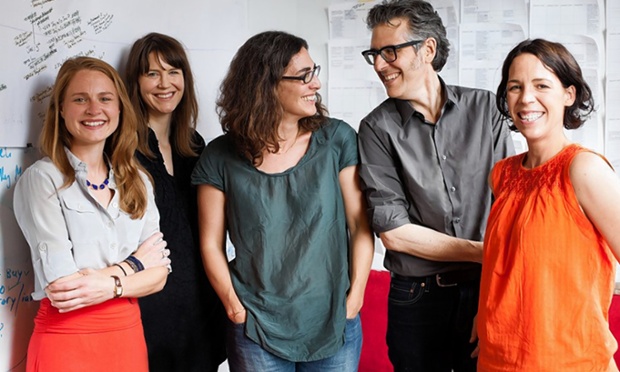
The Serial Production Team (Sarah is in blue; Julie in Orange).

What I have enjoyed most is that you all have enjoyed my writing. I continue to produce (what I would call) quality content every week, because I know how rough it is on Friday/ Saturday/ Sunday afternoon to drag yourself to the comment section of WordPress and verbalize intelligent thoughts. I hope to keep you engaged through the remainder of the semester with my next topic: video blogging, AKA vlogging.

So, readers, what do you want to read about vlogging?

Podcasts Make Money, and Why We, as Educators, Should Care About This

The theme of this week is taking a critical look, because things are not always what they seem. Last week’s episode of This American Life captures that perfectly with the story of a teenager who stays with her abusive boyfriend, but as I said before, things aren’t always what they seem. This American Life, broadcasted weekly on NPR, is one of the last true radio shows, and just like our favorite newspapers and magazines moved online, so did radio. Each week has a theme, and journalistic stories, narrations, and the occasional comedy sketch, explore that theme in the lives of everyday American people.

How do podcasts make money?

If you’ve listened to a podcast recently, you can probably remember your host telling you, “this podcast was sponsored by…” or something similar. Most money made from podcasting comes from sponsorships and advertisements. We’ve already established that podcasting creates an intimate connection between the podcaster and the audience. When Rhett and Link (of Ear Biscuits) or Sarah Koenig (of Serial) tells you about a product, you are more likely to listen to them, as opposed to a model on TV between your favorite shows. This article from Entrepreneur explains five specific ways podcasters can make money. The author also highlights connections between hosts; when they interview one another, it can be used attract new audience members.

Apparently, it works. Advertising weekly on Marc Maron’s WTF will cost you $250,000- $400,000 per year.

20150119171010-podcast

What does this mean for podcasts in my classroom?

Advertisements can also easily be hidden. Remember when I asked if you remember the host of your last podcast mentioning your sponsor? Chances are, if you said no, there was still an advertisement; you just didn’t notice it, mixed in the delivery of content. Beware if you find yourself subconsciously wanting to use MailChimp or Audible in the next few weeks (popular podcast sponsors).

Just like any media, it is important to evaluate your content before assigning it in instruction, and a major part of these evaluations has become the sponsors. Corporate podcasts may be more focused on pushing their product, than content produced by podcasting personalities. On the other hand, mom-and-pop podcasts may be more reliant on sponsors than corporate-funded podcasts. Be aware that even though podcasting is a very intimate medium, economics still apply. By evaluating podcasts, educators should be able to still find content relevant and appropriate for their students.


p.s. If you were more interested in a deep dive financial talk, you won’t get that from me, but this article from Forbes, recommends some great money podcasts!

This Week’s News in Podcasting

In the past two weeks, I have highlighted some of the basics to podcasting, and sometime over those two weeks, the world of podcasting has had news to share with the family on Facebook seemingly every day. Here are some of the headlines I found interesting:

“The Weeds, Vox’s New Policy Podcast, Launches Today”

The newest addition to my already full podcast subscription is presented by Vox.com. In the Weeds is a weekly podcast about some of the nerdiest quirks of Public Policy in the U.S. Government. While that sounds intimidating, have no fear! My prior experience with public policy sadly encompasses a few quick Google searches before a first date with a Political Science major. Material I would typically find dry and irrelevant was made much more interesting when the hosts, Ezra Klein, Sarah Kliff and Matt Yglesias actually talk about it, like real people. This episode talks about some quirks uncovered in the upcoming election (I used the term ‘upcoming’ liberally). As an informed listener, you should know Vox tends to swing their news toward the left; however, I appreciated their critical look at public policy.


“Sneaking Into the Mainstream: Three Days at the LA Podcast Festival”

With Con season (think Comic-Con, Story-Con, Dragon-Con) coming to an end, Podcasting had to get in on the action with the L.A. Podcast Festival. For the weekend of September 18-20th, Podcasting enthusiasts and celebrities flocked to a Beverly Hills Hotel, including Aisha Tyler of Girl on Guy and Marc Maron of WTF. Atendees participated in live podcast recordings and panels on the future of the entertainment medium. A full list of podcasters and activities can be found on the event’s website. Attendees could also either try making podcasts on their own, or record a special episode in Square Space’s Podcasting Lab, filled with the latest gadgets. Fellow fest-ers could simply be pulled from the hallway and into the guest chairs. Out of all the reports, my favorite would have to be the creation of “I listened to Podcasts before Serial” t-shirts.


The cast and crew attend a pre-screening of "Earbuds," a documentary about the rise of podcasting at the 2015 L.A. Podcast Festival (via twitter @LAPodFest )
The cast and crew attend a pre-screening of “Earbuds,” a documentary about the rise of podcasting at the 2015 L.A. Podcast Festival (via twitter @LAPodFest )


“Podcasting 101 will be offered at IVCC”

All of you that were interested in making your own podcast are in luck! For $89 and a quick location change to Illinois, you can enroll in “Podcasting 101,” offered at Illinois Valley Community College. The course is one of the first of its kind to offer an entirely podcasts-based course. Students will learn the basics of podcasting, marketing your work, and audio editing. The class listing can be found on IVCC’s website.


“A Serial TV Show Is on the Way”

I repeat: Serial is becoming a TV show! Reports from the Huffington Post and Vanity Fair have confirmed, Serial is becoming a TV show. The show is still in its preliminary vetting (no details released about a network, actors, etc.). It has been revealed that the show will not follow the trial of Adnan Syed, as some had originally thought. Instead, the show will follow the process of making and producing Serial. Details of Season 2 of Serial, the podcast have yet to be revealed; however their original goal of releasing by the end of Fall 2015 is coming close. Rumors have been circulating that the group will be following Taliban Captive Sergeant Bowe Bergdahl. As Syracuse cold weather sets in, perhaps we’ll be able to enjoy another season of the sweet sound of the political justice system.


(Blogging tip: you can set up alerts for specific topics on Google news to email you an hourly, daily, or monthly digest on your chosen topic. I follow “podcasting” and “podcasting education” daily, and the digest was filled each day.)

Podcast FAQs Part 2: Creating

Alternate Title: Wow, I Didn’t Even Plan this to Happen.

This blog post is part 2 of a two part series answering some frequently asked questions about podcasting. You can read part one about listening to podcasts here.

part2

As you may have noticed, the readings for this week revolve around “Personal Broadcasting” AKA Podcasting. I’ll be touching on some of those resources as well as some of my own research and experience, but first, I have chosen a podcast that shows just how easy it can be to make one. This is episode one of Gilmore Guys, where it is apparent that they are not expert podcasters. Kevin, a long-time fan of the TV show Gilmore Girls, and Demi, who is new to Gilmore Girls, talk about each episode one by one. With such a simple idea, it is hard to believe that they are now one of the top-subscribed podcasts. Aside from the fact that I love Gilmore Girls and anything to do with it, I enjoy this show because it challenges the idea of a ‘fandom.’ Traditionally, female fandoms (such as Gilmore Girls, Twilight, boy bands) are treated as a joke, while male-dominated fandoms (super heroes, sports, nerd culture) are more respected. Kevin and Demi flip that notion on its head. They even point out how it was often snubbed by award committees and male audiences in general because it has two female leads.  (Warning: explicit language).

So now, that you’re brave enough to start your own podcast, here are some commonly asked questions:

Where exactly do I start?

It might be tempting to jump right into equipment and editing and itunes and phone apps and……….

I once took a class on screenwriting, and on the first day, my professor told us the most important consideration to make when producing anything is your audience. Podcasting is no different. Begin with your audience in mind. Who will listen to this? Who do you want to listen to this? The audience could be as small as your classroom, or as large as women, aged 18-34, who are fans of the TV show Gilmore Girls. Next, decide the tone and topic of your show. The best podcasts bring something new to the table that listeners haven’t heard before. The tone (humorous, thoughtful, informative) will drive many logistical decisions: Will content be scripted or will guests be interviewed? How often will you make and release episodes? How long will the podcasts be? Only when you have a clear idea of your content can you begin recording.

Now that I know what I’m going to do, what is the best equipment to use?

The basic equipment you will need for a podcast is a microphone, recording device, standard editing software, speakers or headphones on which to hear your podcast, and a quiet recording space. Basic podcasting kits can be bought online as well with everything included (except the quiet recording space; it makes shipping difficult). Most hard equipment can be found online or at an electronics store, such as this microphone from Best Buy. As for editing software, almost every blog I read, including these weeks readings, recommended Audacity. Audacity is a multi-media editing and recording tool that, most importantly, is free!

The Podcast Host offers many more recommendations on equipment for all levels of podcasting.

Wow, that seems expensive so far. How much will this cost me or my students?

Part of the appeal of podcasting is that it can all be done with equipment you already own. If you have a modern, functional laptop, you are ready to start podcasting. Most laptops are equipped with an external mic and speakers, with the ability to record audio files which can then be edited in Audacity. Students can easily record a podcast on a computer for free, that if done perfectly, may not even require editing. My personal recommendation would be to invest in a USB microphone, since the microphones on computers are generally low quality (think about how many times you ask, “what did you say?” on Skype).

Now that I’ve recorded it, how can I get it to listeners?

Podcasts are like any other data file, and can be shared through a file sharing system (Dropbox, email), Learning Management System (Blackboard, Moodle), or social media. Ideally, you should be sharing your product in a podcast-specific space, such as SoundCloud or iTunes. If you have already amassed some followers on a blog, you may want to upload it there. WordPress specifically hosts podcasts on their blogs. After reaching out to your blogging circle, you may want to share your podcast on as many platforms as possible, in order to reach as many potential followers as possible.

What if followers aren’t important? How can I use this in my classroom?

The power of podcasts is that they harness storytelling in its purest form, speakers and listeners. Teachers can produce podcasts that utilize the flipped classroom model or provide another medium of instruction to reach different learners. Students can use podcasts to tell their own story: use it as a creative writing exercise in English class, or bring a historical event to life in Social Studies class. The how-to’s of recording a podcast are simply the beginning to the endless creativity they can bring to lesson plans.

When fans ask Helen Zaltzman, of popular podcast Answer Me This!, how she got into podcasting, her answer is always the same “By not not doing it.” Give podcasting a try, record a lesson, interview a friend or finish a chapter of that novel you’ve always wanted to write. You never know: your podcast might be the next Gilmore Guys.

Happy podcasting!

Just a reminder, I STILL have not been paid to endorse any podcasts or equipment mentioned in this blog post. All views are my own.